
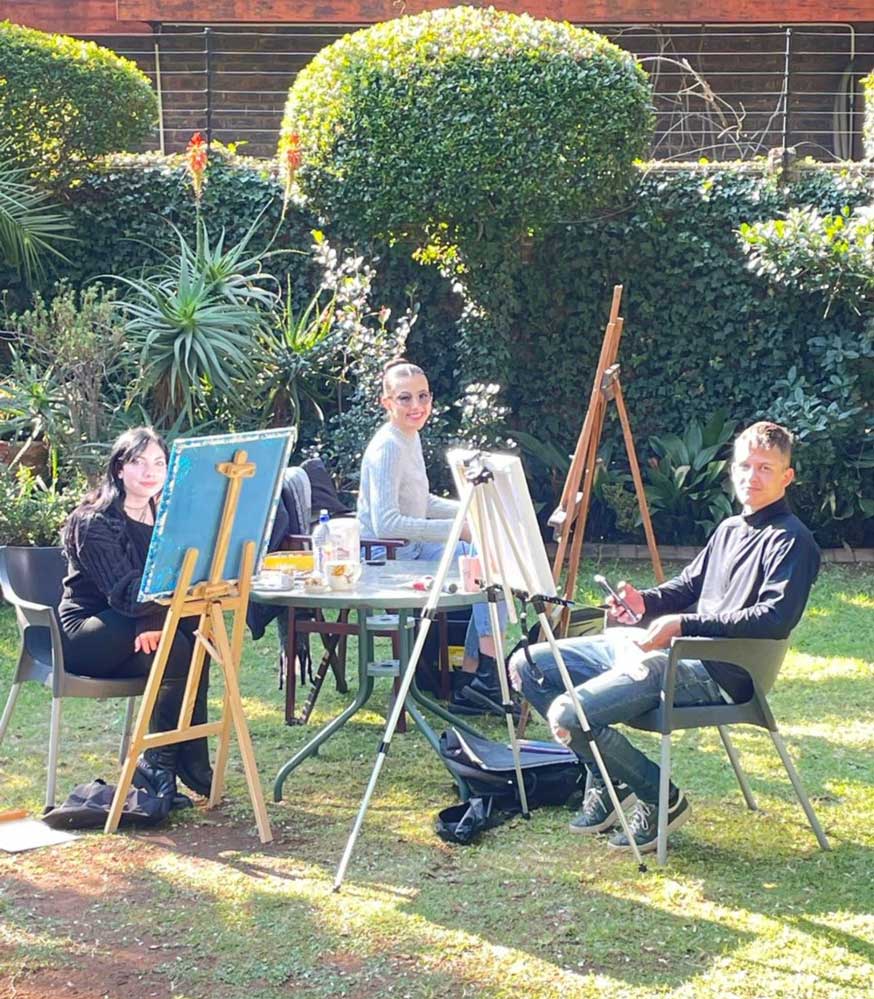
The Benefits of Art for Neurodivergent and LSEN Learners
Every learner processes the world differently. For neurodivergent individuals – including those with ADHD, autism spectrum conditions, dyslexia, sensory processing differences, and other learning variations – traditional academic environments can sometimes feel overwhelming, restrictive, or simply misaligned with how their minds work best.
Art offers something different.
It provides a space where there is no single “correct” way to think, no fixed speed at which to work, and no requirement to express understanding through words alone. For many neurodivergent learners, this is not just refreshing – it’s transformative.
At Bud & Blossom Creatives, we’ve spent over 20 years working with learners of all neurological profiles. Our approach is inclusive by design – not as an afterthought, but as a foundational principle. Here’s why art works so powerfully for neurodivergent minds, and how we create an environment where every learner can thrive.
Why Art Works for Neurodivergent Minds
The structure of Visual Arts education aligns naturally with the strengths and needs of many neurodivergent learners:
Non-verbal expression
Many neurodivergent learners struggle with language-based communication – whether written or verbal. Art provides an alternative channel for expressing thoughts, emotions, and understanding. A learner who cannot easily articulate a concept in words may communicate it powerfully through colour, form, and composition.
Flexible pacing
In art, there is no “right speed.” A learner who needs more time to process, plan, or execute can work at their own pace without falling behind a group. This removes one of the most common sources of anxiety in traditional classrooms.
Multiple valid approaches
Unlike subjects with fixed correct answers, Visual Arts allows for diverse problem-solving strategies. There are many ways to respond to a brief, interpret a theme, or resolve a composition – and all of them can be valid. This flexibility honours the way neurodivergent minds naturally work: laterally, creatively, and often brilliantly.
Predictable structure with creative freedom
This combination is particularly effective for learners who benefit from routine and clear expectations but also need room to express themselves. A structured curriculum with defined tasks and outcomes – delivered within a calm, consistent environment – provides the safety net that allows creative risk-taking.
Research supports these observations. Studies on art therapy and neurodivergent development consistently demonstrate that creative engagement improves focus, emotional regulation, social interaction, and self-esteem in neurodivergent individuals.
Sensory and Emotional Benefits of Creative Practice
Beyond cognitive development, art offers profound sensory and emotional benefits:
Tactile engagement supports sensory processing
Working with materials – clay, paint, charcoal, mixed media – engages the hands and body in ways that support sensory integration. For learners with sensory processing differences, the physical act of creating can be grounding and regulating.
Repetitive creative actions are calming
Activities like shading, hatching, pattern work, and colour blending involve repetitive, rhythmic movements that many neurodivergent learners find soothing. These actions can reduce anxiety, improve focus, and create a meditative state that supports deeper engagement.
Art provides a safe outlet for complex emotions
Feelings that are difficult to verbalise – frustration, overwhelm, joy, confusion – can be channelled into creative work. This is not art therapy (which is a clinical practice), but the therapeutic benefits of creative expression are well-documented and naturally present in any structured art programme.
Colour and visual stimulation engage different neural pathways
For learners who are visual thinkers – which many neurodivergent individuals are – art provides a medium that speaks their language. Visual information is processed differently from text, and engaging with colour, form, and spatial relationships can activate strengths that traditional academics don’t always reach.
Our LSEN-Friendly Teaching Approach
At Bud & Blossom, our approach to neurodivergent and LSEN learners isn’t a separate programme or a special accommodation. It’s woven into everything we do:
Small groups – never overwhelming
We intentionally keep our class sizes small so that every learner receives individual attention. There is no pressure to keep up with a large group, and no risk of being overlooked.
Individual attention and adapted pacing
We meet every learner where they are – not where a curriculum says they should be. If a learner needs more time on a particular skill, they get it. If they’re ready to move ahead, we support that too.
Calm, structured studio environment
Our studio is designed to be a low-sensory, high-focus space. Natural light, organised workspaces, and a consistent routine create an environment where learners feel safe and able to concentrate.
Clear expectations with flexible methods
Every task has a clear brief and outcome – but the path to get there is flexible. Learners can choose materials, approaches, and pacing that suit their individual working style.
Tanja’s extensive experience
With over 20 years of teaching experience, Tanja van Biljon has worked extensively with neurodivergent learners. She understands the nuances – the need for patience, the importance of positive reinforcement, the power of meeting a learner in their moment rather than imposing external timelines.
Building Confidence Through Creative Achievement
For many neurodivergent learners, academic environments can be a source of repeated frustration and diminished self-worth. Art has the power to reverse this cycle.
Every completed artwork is a tangible achievement
Unlike abstract test scores, a finished piece of art is something a learner can see, touch, and take pride in. It’s physical proof of capability.
Displaying work builds pride and self-worth
When a learner’s artwork is displayed in the studio, shared with family, or included in a portfolio, it sends a powerful message: what you create matters.
Portfolio development creates a visible record of growth
Over weeks and months, a learner can look back and see how far they’ve come – not compared to others, but compared to their own starting point. This kind of self-referenced progress is incredibly motivating.
Learners who struggle academically often thrive creatively
We’ve seen it repeatedly – a learner who feels defeated in a traditional classroom walks into the studio and discovers that they’re capable, talented, and valuable. That shift in self-perception doesn’t stay in the art room. It carries into every other area of their life.
Frequently Asked Questions
Every Learner Deserves a Space Where They Can Thrive
If your child learns differently, thinks differently, or experiences the world differently – that’s not a limitation. It’s a strength waiting for the right environment.
At Bud & Blossom Creatives, we’ve built that environment. And we’d love for your child to experience it.